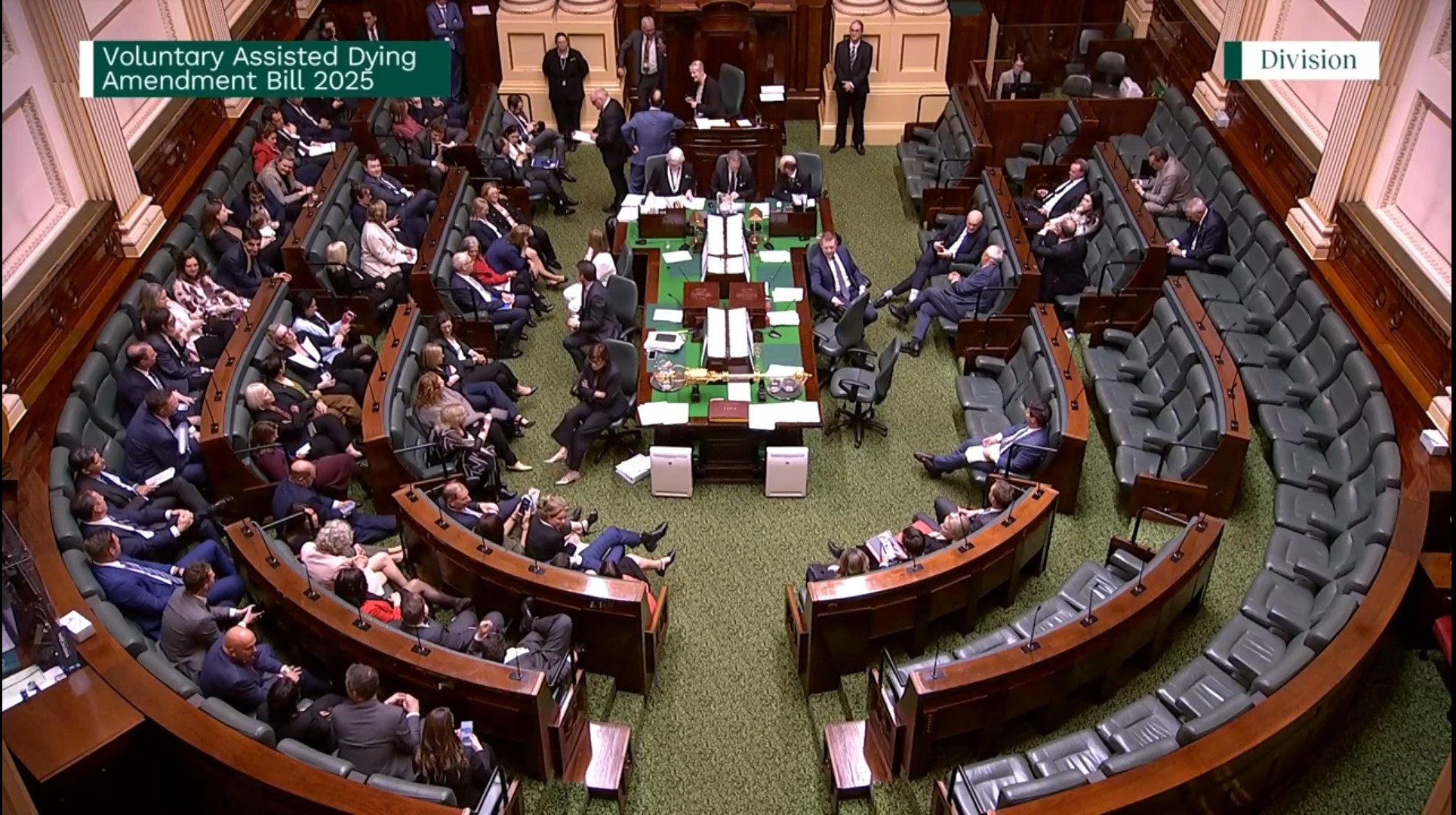
VAD amendments clear Vic Lower House, but it's not over yet
The Voluntary Assisted Dying Amendment Bill 2025 has cleared Victoria’s Lower House 67 votes to 14, marking another historic moment for end-of-life choice in the state. But the real test will be in the Upper House.
The Voluntary Assisted Dying Amendment Bill 2025 has cleared Victoria’s Lower House 67 votes to 14, marking another historic moment for end-of-life choice in the state.
However, for it to become law, the Bill must now pass the Upper House where success is far less certain.
The best analysis shows there may be just a vote or two in it.
The proposed reforms make the existing VAD law fairer and bring it into line with laws in other states. They include giving Victorians more time to get through the VAD process (12 months instead of six), and removing the ‘gag clause’ so that doctors can discuss all end-of-life options.
Other reforms include
- making sure people who ask about VAD are provided with basic information, even if their doctor is unable to support their request
- improving access by boosting the VAD health workforce.
- amending residency requirements
- removing the requirement for third assessments for those with neurodegenerative conditions
- shortening the required time period between the first and final request
These changes will make a real difference to dying Victorians and their families.
The Lower House debate showed that it was possible for politicians to change their minds.
Liberal Leader Brad Battin told parliament he had reversed his view on VAD laws since he voted against their introduction in 2017. He said the main reason was because he’d watched two friends die of cancer.
“It is about people, not politics,” he said. “My position has changed on the facts of what I have done and what I have seen.”
Read more about the Bill's passage though the Victorian Lower House and its prospects for success in the Upper Hosue in The Age and The Guardian.
If you live in Victoriaa, please email your Upper House representatives and tell them why they must support this Bill.