Demand for VAD in NSW continues to grow
The NSW Voluntary Assisted Dying Board’s second annual report shows 2295 people made a first request to access VAD, while 1028 people died using the VAD substance.
The report, covering the period from 1 July 2024 to 30 June 2025, marks the first full year of reporting since the Voluntary Assisted Dying Act 2022 came into effect on 28 November 2023.
Board Chair Professor Jenni Millbank reflected on this growth, noting: “While we do not yet have two full years of data to report, it is clear that voluntary assisted dying activity in NSW has increased during this time. This trend is consistent with reports from other Australian jurisdictions.”
She highlighted that compared with the previous reporting period, there has been an 18 per cent increase in monthly requests and a 26 per cent increase in monthly assessments.
One of the defining features of the NSW framework is that patients can choose whether to self-administer the VAD substance or have it administered by an authorised practitioner. Of the 1028 people who proceeded with a VAD death during the reporting period, four out of five chose practitioner administration, while one in five opted for self-administration. This demonstrates the importance of flexibility and patient choice in end-of-life care.
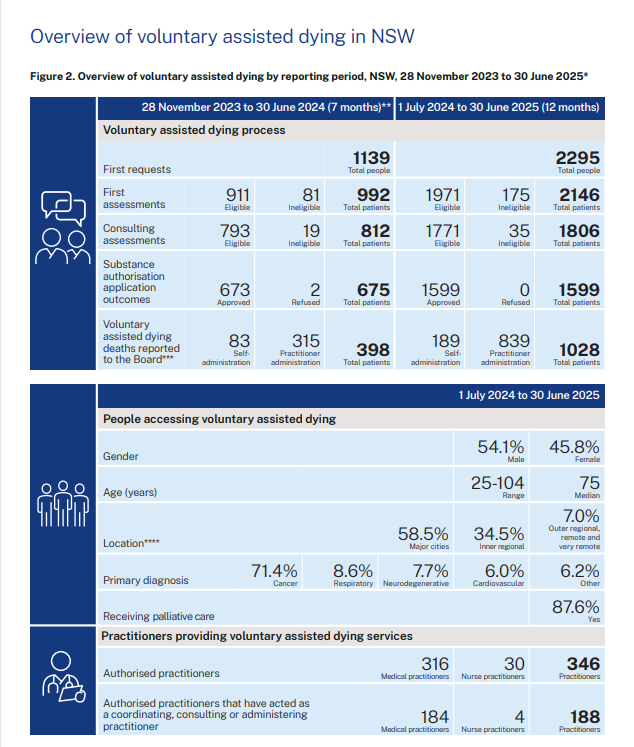
The report also provides a clearer picture of who is accessing VAD. People are more likely to be male, typically in their mid-seventies, and living in major cities. Most had a cancer diagnosis and were already receiving palliative care. In fact, 87.6 per cent of people were currently accessing palliative care at the time of their first VAD assessment, underscoring that VAD is being sought primarily by those already receiving end-of-life support. The median timeframe from first request to substance authorisation was 11 days; and from first request to VAD death was 20 days.
Interestingly, fewer women accessed VAD compared to men, despite women making up a larger proportion of the population aged 70 and over. This gender disparity has been observed across all Australian states and territories.
Regional access is another important theme. Of the 2146 patients assessed, 1449 lived in regional NSW, while 695 lived in Greater Sydney. This reflects the older population profile in regional NSW compared to Sydney and highlights the importance of ensuring equitable access to VAD services across the state.
Finally, the report notes the growing number of practitioners involved in supporting patients through the process. There were 316 authorised medical practitioners and 30 nurse practitioners registered during the reporting period. This workforce is critical to ensuring that patients across both metropolitan and regional areas can access VAD safely and compassionately.
The second annual report underscores that there is rising demand for voluntary assisted dying in NSW. The data on growing practitioner involvement, and detailed demographic insights, provides a valuable foundation for ongoing discussions about end-of-life care. As Professor Millbank’s comments highlight, the system is still in its early stages, but the trajectory is clear: VAD is steadily becoming a recognised and accessible choice for people across NSW, alongside palliative care.